
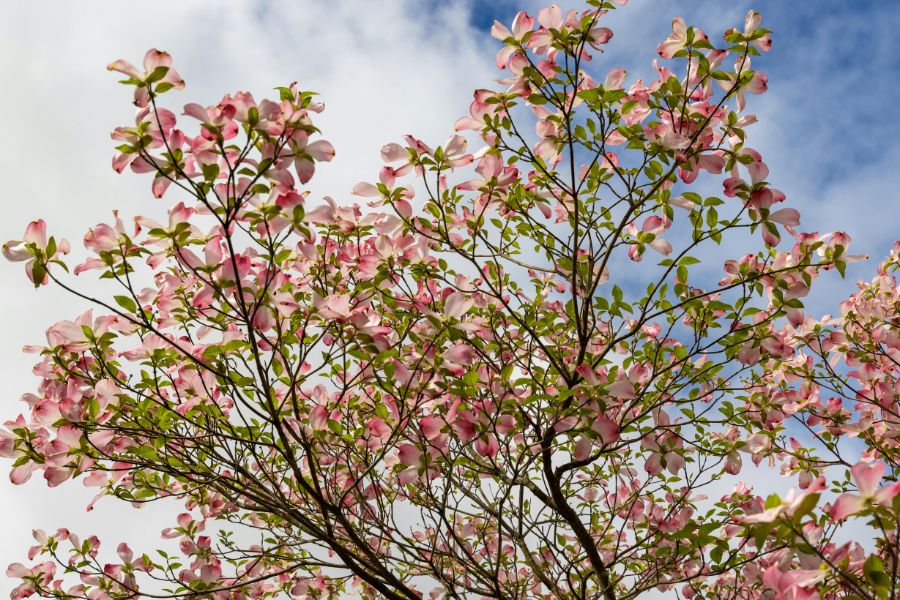
Dogwoods are among the most beloved deciduous trees. Their pink or red spring blooms, white flowers, distinctive bark, and elegant branching pattern make them a favorite for homeowners and landscapers alike. But despite their beauty, dogwoods can be a bit finicky if not cared for properly.
The best practices for dogwood tree care include:
If you’ve got a young tree or plan to start growing dogwood soon, here’s everything you need to know about dogwood tree care.
Dogwoods (Cornus florida) are native to the southeastern United States and typically grow 15 to 30 feet tall. They prefer environments similar to those they enjoy in the wild: filtered light, well-drained soil, and plenty of organic matter.
These trees are naturally understory species, meaning they grow beneath taller trees in forests. That gives us an important clue about how to care for them at home—they do best with partial shade and protection from the harsh afternoon sun and heat.
Location plays a huge role in dogwood health. When planting or transplanting, consider the following:
If you already have a dogwood in place, trimming surrounding vegetation can improve airflow and reduce humidity around the tree.
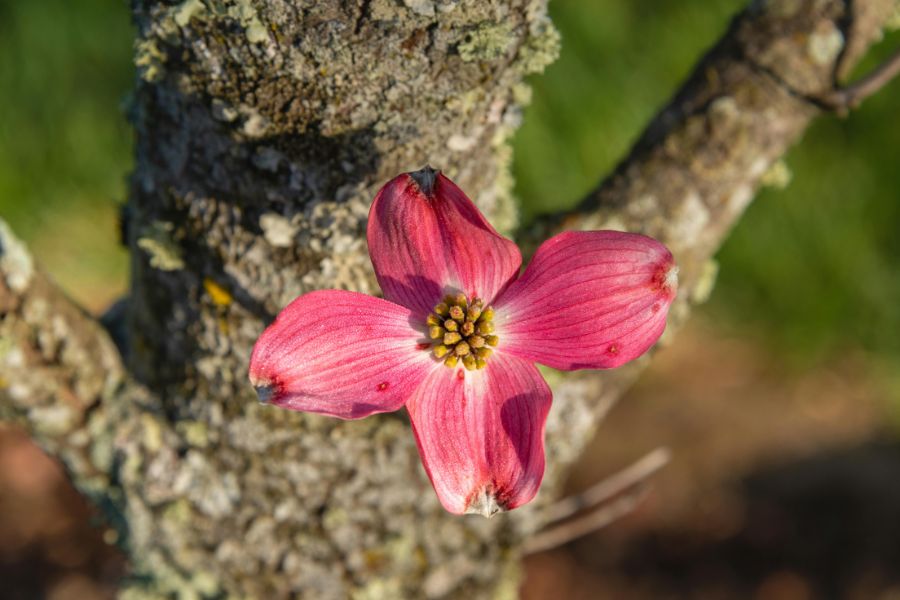
Watering dogwood trees properly is key, especially during the first few years after planting. These trees like consistent moisture but not soggy soil.
During dry spells or summer heat, increase watering frequency slightly—especially for a young tree.
Dogwoods don’t need heavy feeding, but a little nutrient support helps them maintain strong growth and vibrant blooms.
If you notice pale leaves or poor flowering, a soil test can confirm whether your dogwood needs additional nutrients.
Dogwoods are susceptible to several pests and diseases, but early detection and proper care go a long way in preventing them.
This fungal disease causes leaf spots, wilting, and branch dieback—especially in cool, wet conditions. To manage it:
These insects tunnel into the trunk and branches, causing internal damage.
A white, powdery film on leaves usually indicates mildew. It’s often cosmetic but can weaken the tree over time.
Heat, drought, or poor soil can mimic disease symptoms. Consistent watering, mulching, and avoiding mechanical injuries can help your tree recover naturally.
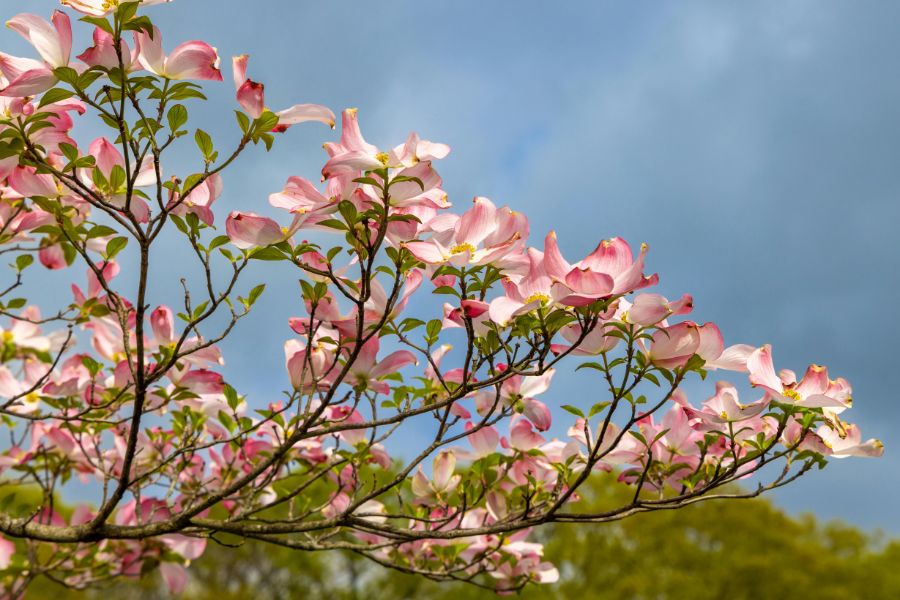
Mulching is one of the simplest and most effective steps in dogwood care, but many homeowners get it wrong. The “mulch volcano” (where mulch is piled against the trunk) is a common mistake that traps moisture and invites decay.
Instead:
A layer of mulch not only keeps the roots cool and moist but also adds organic matter as it decomposes—improving soil health over time.
There are several types of dogwood, but Cornus florida is the most common. These deciduous trees offer more than spring flowers—they also provide striking fall colors, ranging from deep red to orange. Dogwoods grow best when soil conditions and sunlight mimic their natural woodland environment.
How much sunlight do dogwood trees need?
They prefer partial shade, though some varieties can tolerate full sun with proper watering.
Can I plant dogwoods near my house?
Yes, but give them at least 10–15 feet of space from buildings or other large trees to allow full canopy spread and airflow.
Why isn’t my dogwood blooming?
Poor sunlight, overfertilizing, or pruning at the wrong time can reduce blooms. Stick to light pruning right after flowering and ensure it gets enough morning light.
Do dogwoods need to be watered in winter?
If the winter is dry, yes. A deep watering once a month during extended dry spells keeps the roots hydrated.
Caring for dogwoods isn’t complicated—it’s about recreating their natural environment. Give them filtered sunlight, well-drained soil, consistent moisture, and periodic care throughout the year. In return, you’ll enjoy a healthy tree with white flowers in spring and brilliant fall colors that light up your landscape.
Thank you for considering Leaf and Limb for all of your tree care needs. We look forward to working with you and helping to create a beautiful, healthy landscape for your home or business.
