
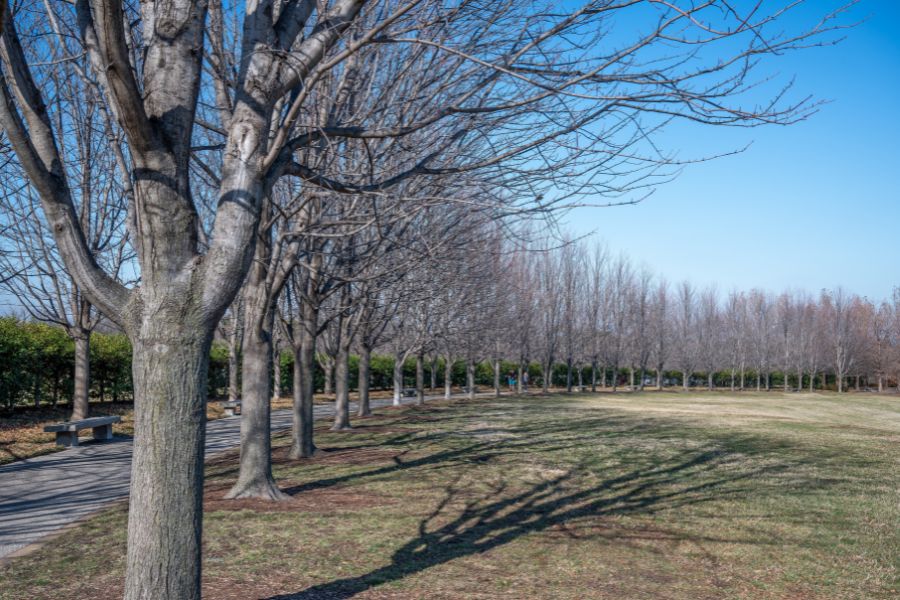
The dormant season for trees is one of the most important — and misunderstood — periods in a tree’s life cycle, and understanding it can dramatically improve how you approach tree care.
The dormant season begins when trees slow their growth in late fall or early winter and continues until early spring, when warmer temperatures and longer daylight signal the start of new growth. During this time, trees conserve energy, shed leaves (in many species), and redirect resources to survive the winter months.
If you’ve ever wondered how to recognize the tree dormant season, when trees enter dormancy, and why dormant season tree pruning is so effective, this guide will walk you through the signs, timing, and practical implications for homeowners in Georgia and beyond.
To understand the tree dormant season, it helps to know what’s happening beneath the outer layer of bark.
When temperatures drop and daylight decreases, many tree species — especially deciduous trees — begin a natural shutdown process. A deciduous tree enters dormancy as it prepares for colder conditions by slowing photosynthesis and growth. This is a survival strategy built into the tree’s life cycle.
Here’s what typically happens when trees go dormant:
In simple terms, trees enter dormancy to conserve energy until conditions improve.
One of the most common questions we hear from homeowners is: “How do I know when my trees are actually dormant?” Over the years, our experience has shown that the answer isn’t based on a single date — it’s based on observable signs and seasonal patterns.
For most deciduous trees, leaf drop is the most obvious signal. When the majority of leaves have fallen, the tree has likely entered dormancy.
However, not all trees behave the same way. Some species hold onto leaves longer than others, especially during mild winters in Georgia.
During the growing season, you’ll notice fresh buds, shoots, and expanding leaves. Once that activity stops and no new buds are forming, dormancy is usually underway.
Trees respond to environmental cues, not calendars. The dormant season typically begins when:
In North Georgia, this often happens in early winter, though timing can vary by year and by tree species.
Branches may appear dry or inactive, but that doesn’t necessarily mean a tree is dead. A tree branch can look lifeless during dormancy while still being healthy beneath the bark.
If you’re unsure whether a tree is dormant or if a tree is dead, examining buds, bark condition, and branch flexibility can provide clues — though sometimes a professional assessment is needed.

Dormancy usually ends in early spring, when trees sense warmer temperatures and longer days. This transition marks the return of the growing season.
Signs that dormancy is ending include:
It’s worth noting that different tree species wake up at different times. Some trees break dormancy early, while others remain inactive longer.
Dormant season tree pruning is widely recommended because it aligns with how trees naturally function.
When pruning occurs during dormancy:
Our customers often ask whether tree pruning during dormant season is always ideal. While dormant pruning is beneficial for many trees, there are exceptions depending on species, health, and specific goals.
For homeowners, this means winter months can be one of the smartest times to address structural issues and remove problematic branches.
Understanding the contrast between dormancy and active growth helps clarify why timing matters in tree care.
During the growing season:
During the dormant season:
Over the years, our experience has shown that many tree problems arise not from pruning itself, but from pruning at the wrong time.

Not necessarily. Many healthy trees appear lifeless in winter. The difference between dormancy and death often lies beneath the bark. For more details, see our full article on how to know if a tree is fully dead.
Different tree species respond differently to climate conditions, and some sub-types have different seasons than others. For instance, magnolia trees require different care routines depending on which sub-species they are. Some trees enter dormancy earlier than others, even within the same yard.
While dormant season tree pruning is often ideal, certain species (like spring-flowering trees) may require more strategic timing to avoid reducing blooms.
If you want to take advantage of the dormant season without harming your trees, keep these principles in mind:
We often tell homeowners that winter is the perfect time to observe trees without the distraction of leaves. Structural weaknesses are easier to spot, and long-term planning becomes much clearer.
Dormancy isn’t just a seasonal pause — it’s a critical phase in the tree’s life cycle. Proper care during this period can influence growth, stability, and resilience for years.
When trees are pruned correctly during dormancy, they often respond with stronger growth in spring. When neglected or improperly cut, they may develop weak branch attachments or uneven growth patterns.
This is why tree care decisions made in winter often have the biggest impact later in the year.
While dormancy offers many advantages, it’s not a free pass to prune indiscriminately.
Be cautious if:
In these situations, it’s often safer to seek professional guidance rather than risk damaging the tree or property.
Thank you for considering Leaf and Limb for all of your tree care needs. We look forward to working with you and helping to create a beautiful, healthy landscape for your home or business.
