
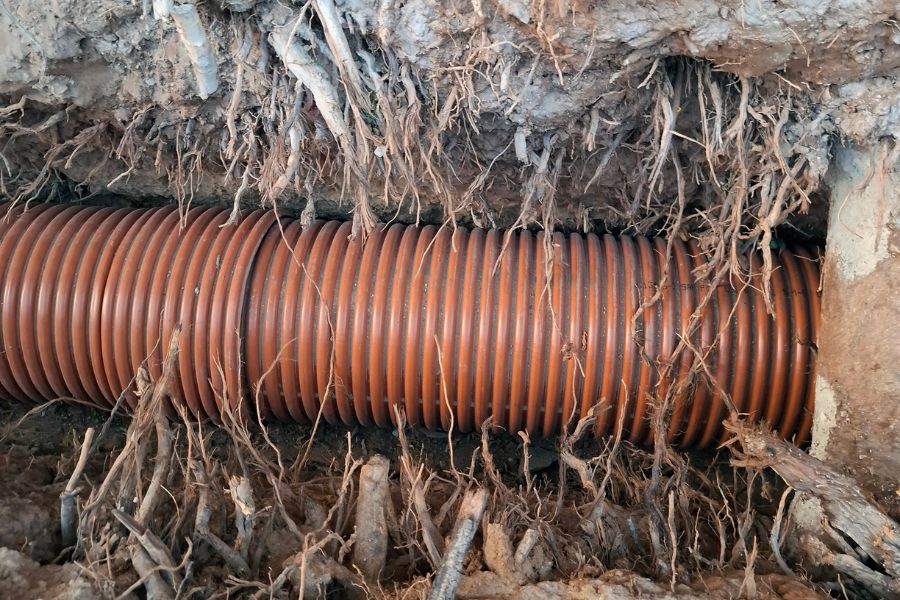
Tree roots in sewer line issues are more common than most homeowners expect, especially in older neighborhoods where mature trees and aging sewer pipes often coexist. We’ve seen firsthand how root growth can quietly turn into a serious (and expensive) problem.
The most effective way to get rid of tree roots in your sewer lines is to remove the roots physically, repair any damaged piping, and prevent future root growth through proper maintenance or professional treatment.
In many cases, methods like hydro jetting, mechanical root removal, or targeted root-killing treatments are combined to restore your sewer system and protect it long-term.
If you’ve noticed slow drains, recurring clogs, or mysterious plumbing issues, this guide will walk you through why roots invade sewer pipes, how to remove tree roots, what dissolves tree roots in sewer lines, costs, insurance questions, and the smartest ways to prevent the problem from coming back.
Tree roots in your sewer line aren’t accidental; they’re opportunistic. Roots naturally seek out moisture and nutrients, and sewer pipes are a perfect target.
Here’s how it usually happens:
We often tell homeowners that older pipe materials—like cast iron or clay—are especially vulnerable. Modern PVC pipes are more resistant, but even they’re not immune if joints loosen or soil shifts.
Before diving into how to kill tree roots in sewer line systems, it helps to recognize the warning signs early. Catching the problem sooner can dramatically reduce repair cost.
Common symptoms include:
Over the years, our experience has shown that many homeowners assume these are minor plumbing issues—until the damaged sewer line becomes impossible to ignore.
here’s no single universal solution. The right approach depends on the severity of the blockage, pipe materials, and the extent of tree root damage.
Depending on the severity of the invasion, a plumber may need to start the process with their rotating auger or root-cutting tool. This physically cuts through roots in sewer lines and restores flow.
Pros:
Cons:
Hydro jetting uses pressurized water to blast away roots, grease, and debris from sewer pipes. Many plumbers we’ve worked with recommend hydro jetting as a follow-up after mechanical root removal to reduce the chance of regrowth.
Pros:
Cons:
If you’re wondering what dissolves tree roots in sewer lines, the answer is usually chemical treatments designed to kill roots without harming pipes.
Common options include:
These treatments can help with killing roots, but they’re typically a temporary solution. In our experience, homeowners who rely solely on chemicals often face recurring issues within a year or two.
DIY solutions can work in very mild cases, but they’re not always the safest or most effective choice.
You might consider DIY root killing if:
However, you should call a professional plumber if:
We often remind homeowners that aggressive DIY methods can accidentally worsen damaged piping, turning a manageable issue into a full sewer line repair.
One of the most common questions about tree roots in sewer line is cost of removal. Unfortunately, the price varies widely depending on the severity of the problem.
Typical cost ranges:
From what we’ve seen across North Georgia, the biggest factor in repair cost is whether the roots caused structural damage. Once pipes collapse or shift, the price rises quickly.
Many homeowners ask us whether tree roots in their sewer line are covered by insurance policies. It's a fair question, but the answer is generally no.
The reason for this is that a job like this is considered maintenance, not a sudden emergency. While it is possible to have a separate policy covering such things, most people don't have it.
In general:
We’ve seen situations where homeowners assumed they were covered, only to discover that root-related damage wasn’t included. It’s always worth reviewing your policy or speaking directly with your insurance provider.
Removing roots is only half the battle. Preventing them from returning is what protects your sewer system long-term.
Effective prevention strategies include:
Interestingly, our customers often ask whether cutting down a tree solves the problem. Sometimes it helps, but roots already inside the pipes can continue causing issues even after the tree is gone.
If you’re dealing with aggressive root growth near your property, you may also find it helpful to read our guide on how to destroy tree roots for a deeper understanding of root behavior and control strategies.
Thank you for considering Leaf and Limb for all of your tree care needs. We look forward to working with you and helping to create a beautiful, healthy landscape for your home or business.
